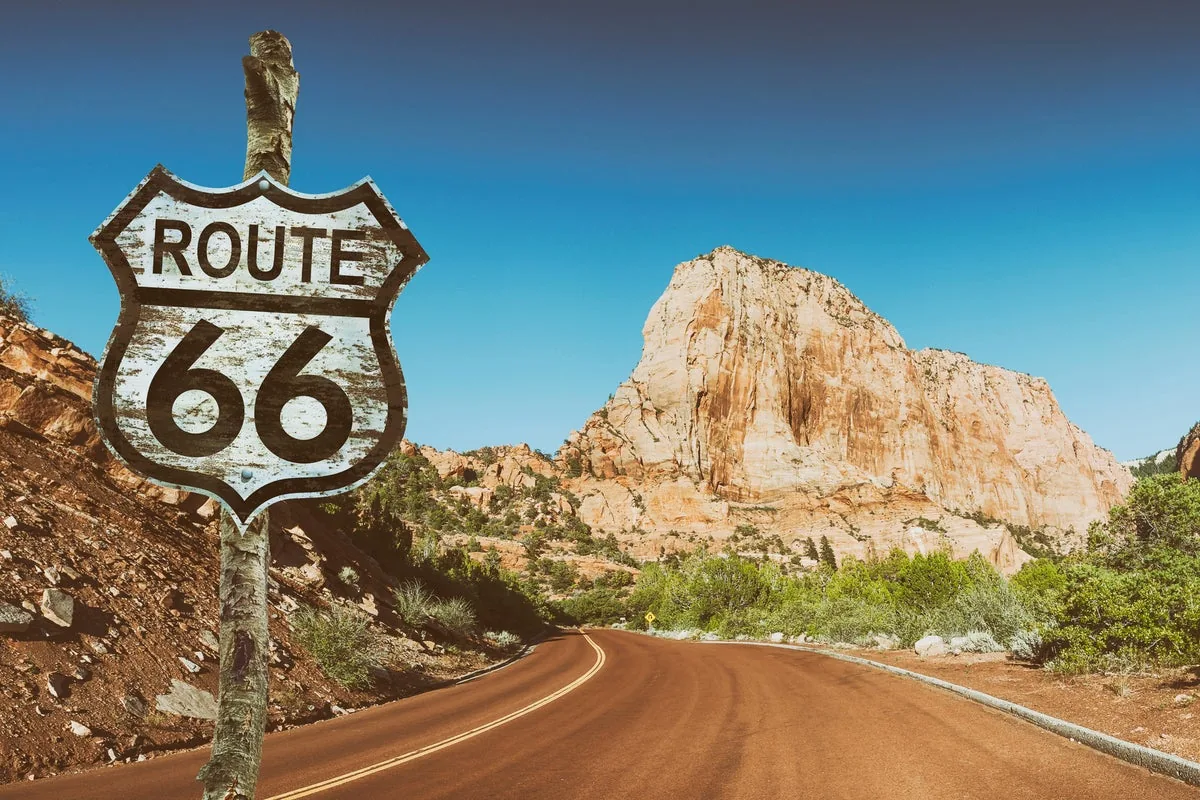
CHICAGO, IL — Route 66 turns 100 in 2026, making this a timely moment to plan the classic American drive from Chicago to Santa Monica. The 2,500-mile route crosses eight states and remains one of the country’s most recognizable road trips.
The route is no longer one continuous highway, so travelers need to plan carefully to catch the surviving historic sections, roadside landmarks, and old-school motels that still define the experience.
How Route 66 became an American icon
First commissioned in 1926, Route 66 was eventually fully paved in the late 1930s and ran through Illinois, Missouri, Kansas, Oklahoma, Texas, New Mexico, Arizona, and California. It stretched 2,448 miles from Chicago to Santa Monica.
Its reputation grew as thousands of families heading west for work used it during hard economic times, and later as postwar car travel made it a symbol of freedom, diners, neon signs, and desert scenery.
The road was removed from the federal highway system in 1985 after being replaced by the Interstate Highway System, but preservation efforts helped keep its legacy alive.
Why Chicago is the traditional starting point
The ceremonial beginning sits on Adams Street in downtown Chicago near the Art Institute, where a modest sign marks the start of the journey. Before leaving, many travelers stop at Lou Mitchell’s on W. Jackson Boulevard, a breakfast spot serving westbound road-trippers since 1923.
The article also points to the Silversmith Hotel Chicago Downtown as a convenient place to stay, just a short walk from the Route 66 start.
Planning the drive and choosing the right pace
The guide warns against relying on Google Maps alone, since it can route drivers onto interstates that replaced large parts of the original road. Travelers are advised to follow the Historic Route 66 signs instead.
For timing, two weeks is described as ideal, with 150 to 200 miles a day allowing enough time for attractions and motel stays. Ten days is workable but faster, while seven days requires careful planning and some interstate use. Four days or less would make the trip feel like a highway grind.
Landmarks, motels, and the Santa Monica finish
Among the recommended stops are Wilmington’s Gemini Giant, Dwight’s Ambler’s Texaco Gas Station, Cadillac Ranch near Amarillo, Oklahoma’s Blue Whale of Catoosa, and the burro-filled streets of Oatman, Arizona.
For lodging, the guide highlights independent motels including the Blue Swallow Motel in Tucumcari, the Wigwam Motel in Holbrook, and the Boots Court Motel in Carthage. The trip ends at Santa Monica Pier, where many travelers take a photo at the “End of the Trail” sign before walking to the end of the pier.
Plan smarter with Travel Your Way.
Leave a Reply